What Does Craft Barbecue Actually Cost?
Barbecue prices can be difficult to compare because a pound of brisket is not necessarily the same product from one restaurant to another. The grade of the beef, how the animals are raised, the source of the meat, the cooking method and even the fuel used all have a direct impact on what it costs to produce the final product.
At 2Fifty, our barbecue is cooked exclusively with wood, without gas or electric assistance, and our sourcing includes producers such as Creekstone Farms, Snake River Farms, Niman Ranch and Roseda Farms. Because of that, we wanted to understand where our prices actually sit when compared with other established craft barbecue restaurants operating in a similar category.
We reviewed published menu prices from a group of leading craft barbecue operators across several U.S. markets and normalized comparable meats to a price per pound. We excluded delivery-app markups, catering pricing, combination plates and products that could not reasonably be compared on the same basis.
The result was different from the perception that premium craft barbecue is necessarily priced higher at 2Fifty.
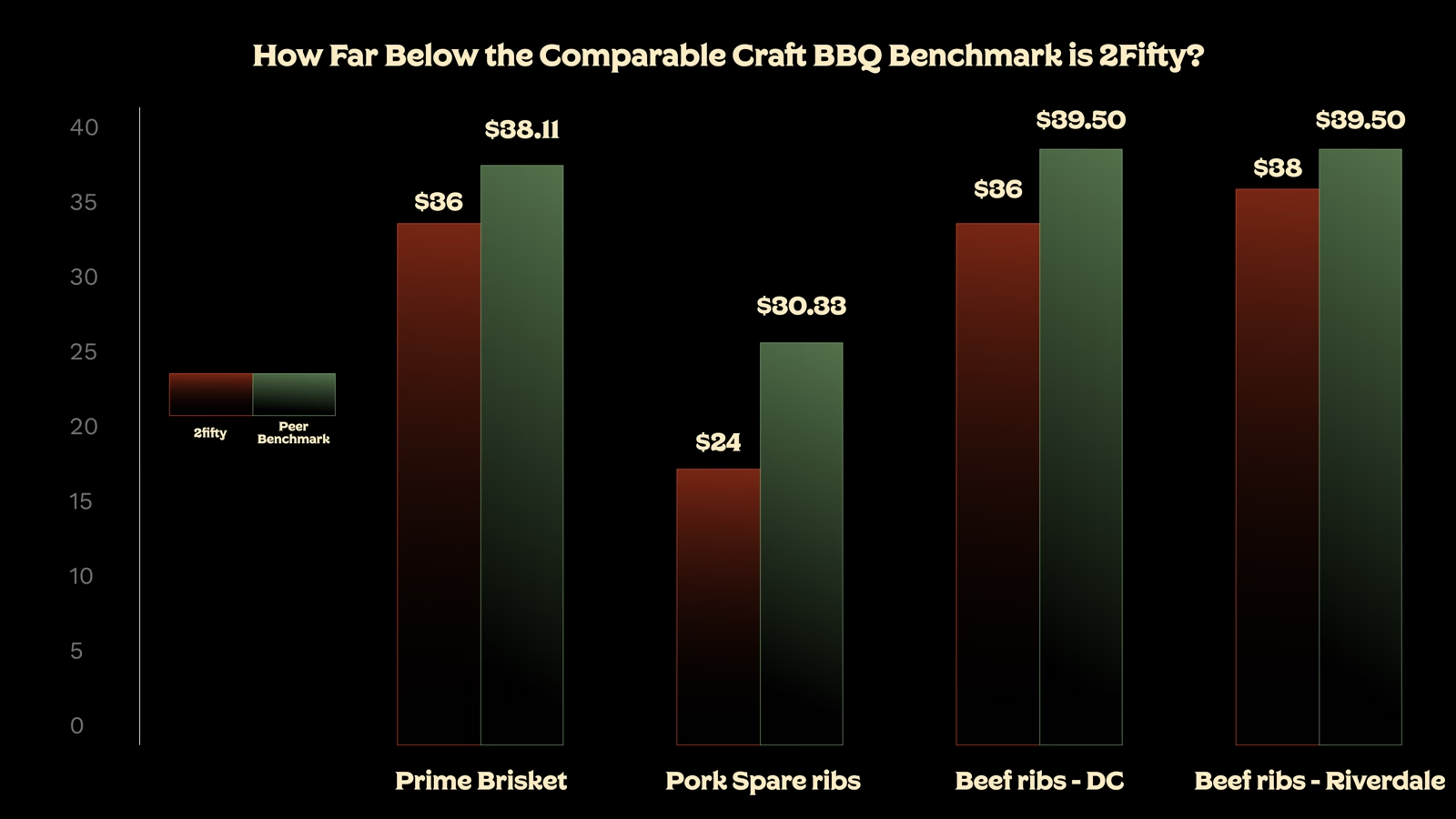
Our Creekstone Farms Prime brisket is currently $36 per pound. Across the comparable craft barbecue menus reviewed, Prime or equivalent premium brisket averaged approximately $38.11 per pound. That places 2Fifty about 5.5% below the peer benchmark.
The difference is even more significant with pork ribs. Our spare ribs, sourced from Niman Ranch, are currently $24 per pound. Comparable pork ribs in the peer group averaged approximately $30.33 per pound, putting 2Fifty about 20.9% below the benchmark.
Our beef ribs follow the same pattern. They are currently $36 per pound in Washington, D.C. and $38 per pound in Riverdale Park, compared with a peer benchmark of approximately $39.50 per pound. That places the D.C. price about 8.9% below the benchmark and Riverdale Park about 3.8% below it.
These numbers do not mean that handcrafted barbecue is inexpensive to produce. Brisket loses a substantial portion of its original weight through trimming and the cooking process. The meat then spends many hours in the smoker while a pitmaster manages a live wood fire throughout the cook. Premium livestock programs and responsible sourcing also carry costs that are fundamentally different from commodity meat.
That distinction is important when comparing prices. A lower-priced brisket made from a different grade of beef, sourced through a conventional commodity program or cooked using an assisted system is simply not the same product.
When we compare equivalent craft barbecue as closely as possible, our current core pricing sits at or below the peer benchmark:

approximately 5.5% below for Prime brisket, 20.9% below for pork spare ribs, and between 3.8% and 8.9% below for beef ribs depending on location.
We have never tried to make barbecue the cheapest food we can produce. Our approach has always been to buy better ingredients, work directly with producers whenever possible, cook exclusively with wood and respect the amount of time and labor required to turn those ingredients into barbecue.
The data simply adds useful context: when 2Fifty is compared with restaurants producing barbecue within the same premium craft category, our prices are not above that market. In the products we reviewed, they are consistently at or below it.
All wood. All good.
Methodology and Sources
This comparison used publicly available menu prices from a group of established craft barbecue restaurants operating in a similar premium category across several U.S. markets. Where menus listed prices by the half-pound, by the plate or by another unit, figures were converted to a price per pound so items could be compared on the same basis. Delivery-platform pricing, catering rates, combination plates and items that could not reasonably be compared were excluded. Prices reflect published menus at the time of review and are subject to change.